

By Diana Gifford Jones ——Bio and Archives--November 21, 2026
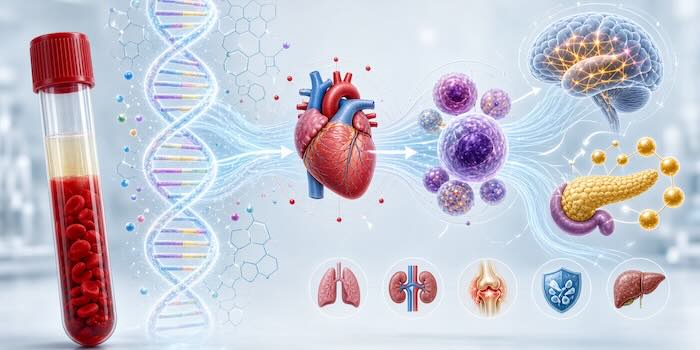
Medicine is entering a new era. Increasingly, both physicians and patients can investigate the future. A blood sample, a genetic profile or an analysis of biological markers can offer clues about a person's susceptibility to heart disease, cancer, Alzheimer's, diabetes and a growing list of other conditions.

The potential for better lives is undeniable. But how do you know when to learn more? What will it really mean for you? And at what cost?
The completion of the Human Genome Project in 2003 mapped the human genetic blueprint. That achievement facilitated efforts to understand how our inherited characteristics, biological markers and environmental exposures might determine our future health.
Today, genetic testing can identify certain inherited mutations associated with substantial disease risks. Researchers can also calculate polygenic risk scores, combining information from hundreds or thousands of genetic variations to estimate susceptibility to common diseases. Blood biomarkers offer another window, sometimes revealing biological changes before a person experiences any symptoms.
But using tests to calculate a probability is not the same thing as identifying a genuine medical warning. Neither genetic predisposition, biomarkers, nor higher statistical risk amount to a diagnosis.
And then there is human nature.
Imagine being told at 55 of an elevated risk of developing Alzheimer's disease. There may be no reliable way to determine whether you will actually develop it, or when. Currently, there is no intervention proven to prevent it. Yet the knowledge will stick with you, day in and day out. Are you happy to know it?
The dilemma applies to numerous predictive tests. A result can trigger further investigations, repeat testing, specialist consultations and sometimes invasive procedures. An uncertain finding can become a medical problem simply because somebody has discovered it. The technical term for one aspect of this is overdiagnosis: identifying abnormalities that in the end do not cause symptoms or shorten a person's life.
So before agreeing to any predictive test, establish your ground rules.

First, ask whether the result is sufficiently reliable to mean anything. Is it identifying a well-established genetic mutation, or merely calculating a statistical association? What is the absolute risk, rather than, say, an alarm-sounding percentage increase?
Second, ask whether the information changes anything. Is there an established treatment, a preventive measure or a surveillance programme that would improve your prospects? If the answer is no, what exactly are you gaining?
Third, consider the psychological cost. Some people find knowledge empowering. Others find uncertainty exhausting. There is no virtue in concluding that everyone benefits from knowing their statistical chances of developing a devastating illness.
Finally, consider whether you want this information to become part of your medical history, and who might have access to it. Genetic information can have implications beyond the individual, including for family members who may share the same inherited characteristics.
None of this is an argument against appropriate testing. If a family history suggests an inherited cancer syndrome, for example, genetic counselling and testing may be vital. If a biomarker identifies a treatable condition early enough to make a difference, refusing to investigate would be foolish.
But there is a difference between testing because there is a good medical reason and testing simply because the technology makes it possible.
I would rather see people concentrate on what they can influence: maintaining a healthy weight, exercising, eating sensibly, avoiding tobacco, moderating alcohol and keeping up with preventive care. None of these guarantees a long life. But they offer clear benefits.
We should welcome discoveries that allow us to prevent disease and save lives. But we should also preserve the freedom to decline information that offers no practical benefit.
***
This column offers opinions on health and wellness, not personal medical advice. Visit [url=http://www.docgiff.com]http://www.docgiff.com[/url] to learn more. For comments, diana@docgiff.com.
View Comments